Understanding the Region
WhatCentralandEasternEuropeMeansinThisContext
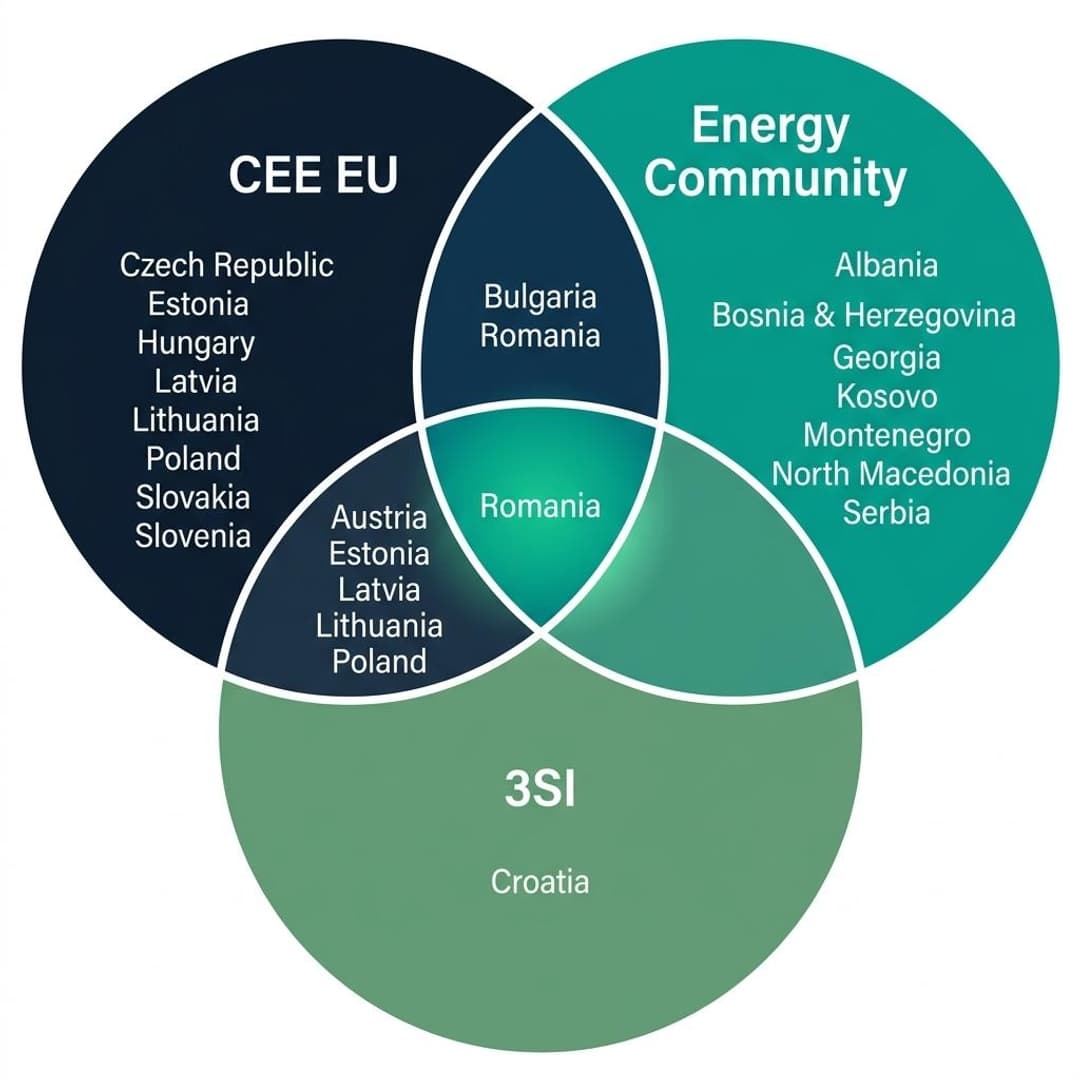
CEE is not a single bloc — it is a layered landscape of EU Member States, Energy Community partners, and Three Seas Initiative members. Precise definitions matter for analysis, investment, and policy. Here we map the three overlapping frameworks that define the region's energy transition.
Three Overlapping Frameworks
CEE energy analysis requires navigating three distinct but overlapping regional groupings — each with its own membership, policy instruments, and strategic logic.
Where the Frameworks Converge
These three groupings are not separate silos — they overlap geographically and institutionally. Poland, Romania, and Bulgaria sit within all three frameworks simultaneously. The Baltic States are both EU members and 3SI participants. The Western Balkans engage through the Energy Community while aspiring to EU and 3SI integration.
This layered landscape creates unique analytical challenges. A single infrastructure project — say, a cross-border interconnector between Romania and Serbia — may involve EU cohesion funding, Energy Community regulatory harmonisation, and 3SI investment-fund capital. Understanding which framework applies, and where they reinforce or contradict each other, is essential for effective policy design and investment strategy.
Vienna — The Natural CEE Energy Hub
Vienna is the natural convening point for CEE energy policy and expertise. Positioned at the geographic and historical crossroads of Western and Eastern Europe, the city hosts a unique concentration of energy institutions that no other European capital can match.